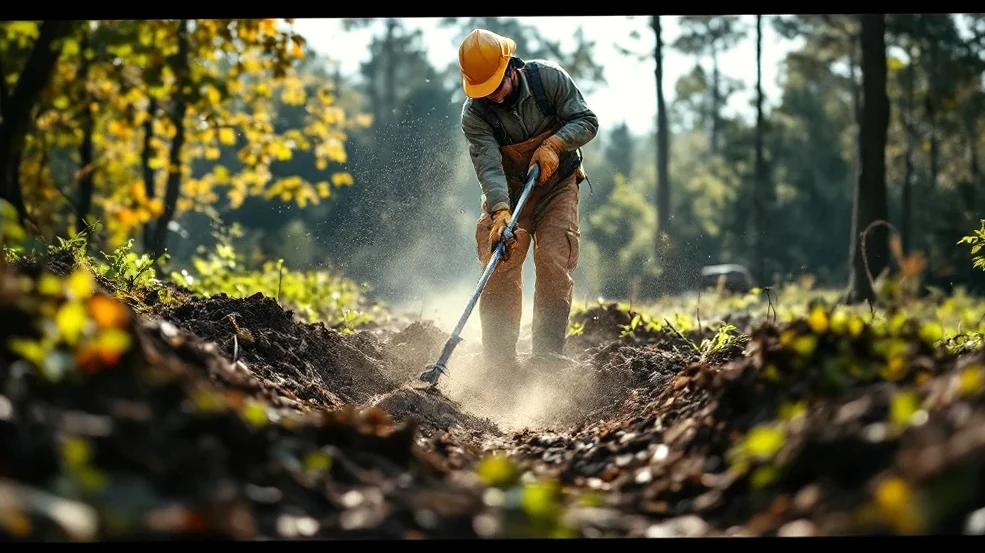
What is Forest Mulching & Brush Clearing and how does it work?
Forest mulching and brush clearing is a land management method that uses specialized equipment to grind trees, brush, and vegetation into mulch on-site. It clears overgrown areas without hauling debris away, leaving nutrient-rich mulch that improves soil health and prevents erosion.
In Montgomery, this process is especially useful for properties with dense underbrush, small trees, or invasive species like kudzu. The mulching machine, often a skid-steer with a rotary drum attachment, chews through vegetation and turns it into fine wood chips. Unlike traditional clearing, there's no burning, hauling, or piles of debris to deal with afterward.
The mulch left behind acts as a natural ground cover. It suppresses weeds, retains moisture, and breaks down over time to enrich the soil. This is a big deal in Alabama's clay-heavy soils, which can benefit from the organic matter. It's also a fire-smart choice, reducing dry brush that could fuel wildfires.
Homeowners often use forest mulching to prep land for building, create firebreaks, or just reclaim overgrown yards. It's faster than hand-clearing and less disruptive than bulldozing, which can strip topsoil. The key is hiring a crew that knows how to adjust the machine's settings for the right mulch consistency, too coarse, and it won't decompose well; too fine, and it can blow away in our windy springs.
How Forest Mulching & Brush Clearing works, step by step
A professional crew assesses your property, operates a mulching machine to grind vegetation, and leaves the mulch in place. The process typically takes a day or two, depending on acreage and density.
First, the crew walks the property to identify hazards like stumps, rocks, or steep slopes. In Montgomery, we often find hidden debris from old fences or construction, so this step prevents equipment damage. They'll flag any trees you want to keep and note drainage areas where mulch should be spread thinner.
Next, the mulching machine, usually a skid-steer with a heavy-duty drum head, goes to work. It shreds everything in its path: saplings, brush, even small trees up to 6 inches in diameter. The operator controls the mulch texture by adjusting the drum speed and travel pace. For thick privet or kudzu, they might make two passes to ensure thorough grinding.
As the machine moves, it blows the mulch behind it in an even layer. On sloped lots common in neighborhoods like Dalraida or Wynlakes, the crew might spread it by hand to prevent washouts. They'll avoid piling mulch against tree trunks or structures, which can attract termites or hold moisture against siding.
Finally, they'll do a walk-through with you to spot any missed patches. Some homeowners opt to have the mulch tilled into the soil for gardens, while others leave it as-is for erosion control. Either way, the result is a clean, natural-looking space that's ready for your next project.
Why Forest Mulching & Brush Clearing matters for your home
Overgrown brush isn't just an eyesore, it's a fire risk, a pest magnet, and a barrier to using your land. Mulching clears it sustainably, improving safety, accessibility, and soil quality without the cost of hauling or burning.
In Montgomery's humid climate, unchecked brush becomes a breeding ground for mosquitoes, ticks, and snakes. Mulching eliminates those habitats while avoiding the noise and pollution of burning. It's also a win for allergies; grinding up poison ivy or oak neutralizes the oils that cause reactions, unlike chopping or mowing, which can spread them.
Fire prevention is another big reason. The mulch left behind is less flammable than dry brush, and clearing creates defensible space around homes. After the 2019 wildfires in nearby counties, many Alabama homeowners started using mulching to create firebreaks along property lines.
For those planning to build or expand, mulching preps the land without stripping topsoil like a bulldozer would. The mulch layer prevents erosion during construction, which is crucial on Montgomery's red clay slopes. Over time, it decomposes and improves soil structure, making it easier to plant grass or gardens later.
Resale value matters. A cleared, mulched lot looks cared for and gives buyers a blank canvas. In neighborhoods like Cloverdale or Old Cloverdale, where lots are often wooded, this can make the difference between a quick sale and a property sitting on the market.
Common problems and what causes them
Poor mulch quality, uneven clearing, and hidden debris are the top complaints. These usually stem from rushed jobs, wrong equipment, or skipping the initial site assessment.
Chunky, uneven mulch is a red flag. It happens when the machine's drum is set too high or the operator moves too fast. Good mulch should look like coarse wood chips, not stringy clumps. If it's too rough, it won't decompose properly and can mat down, blocking water from reaching the soil.
Some crews leave 'islands' of untouched brush around large trees or rocks. While it's fine to preserve certain features, haphazard skips suggest laziness. A pro will mulch right up to the base of trees (without touching the bark) and grind small rocks into the mix for better drainage.
Hidden debris like old tires or concrete chunks can damage the mulcher's teeth. That's why a thorough walk-through is non-negotiable. In older Montgomery neighborhoods like Garden District, we often find buried trash from decades ago. A metal detector or ground-penetrating radar helps spot hazards before they wreck the equipment.
Timing matters. Mulching during a drought leaves dry, dusty mulch that blows away. After heavy rain, the machine can rut up soggy ground. Spring and fall are ideal, but if you need summer work, early morning hours beat the afternoon heat for both crew and equipment.
- Avoid crews who promise to mulch 'down to bare dirt', that strips organic matter and invites erosion.
- Watch for mulch piled too deep (over 4 inches), which can smother plants and build mold.
- Ask about insurance. A thrown rock or damaged septic line can get expensive fast.
Common questions about Forest Mulching & Brush Clearing
Frequently Asked Questions
How long does the mulch last?
In Montgomery's heat and humidity, mulch breaks down in about 12, 18 months. It decomposes faster if tilled into the soil or in direct sunlight. For longer coverage, opt for a thicker initial layer (3, 4 inches).
Can I mulch an area with large trees?
Yes, but the crew will work carefully around them. Mulching right up to the trunk (without touching it) prevents weeds and retains moisture. Just avoid 'volcano mulching', piling it against the bark, which causes rot.
Will mulching kill roots or stumps?
It grinds small surface roots but won't kill deep roots or stumps. For those, you'd need stump grinding or herbicides. The mulch layer can slow regrowth from remaining roots, though.
Is mulching better than burning for clearing land?
In most cases, yes. Burning releases carbon, risks spreading, and leaves ash that washes away. Mulching recycles nutrients on-site and doesn't require burn permits or fire watches.
Can I use the mulch for my garden?
Absolutely. It's great for vegetable beds or flower gardens after it composts for a few months. Fresh mulch can tie up nitrogen as it breaks down, so mix in some fertilizer if planting right away.
How steep of a slope can be mulched?
Skid-steers can handle slopes up to about 30 degrees. Steeper than that, and the crew might use a tracked mulcher or hand-clear parts. Mulch helps prevent erosion on hillsides common in neighborhoods like Capitol Heights.
What's the best time of year to mulch?
Spring and fall are ideal, moderate temps and moisture help the mulch settle. Summer works if done early in the day, but avoid drought periods. Winter mulching is rare here due to wet ground.
Does mulching spread invasive plants?
Not if done right. The machine's grinding action kills most seeds and root fragments. For aggressive invasives like kudzu, we recommend a follow-up herbicide spot treatment to catch any survivors.
Can I mulch after a storm knocks down trees?
Yes, but large trunks may need cutting first. Mulchers handle branches up to 6 inches well, but bigger logs can jam the machine. It's a great way to clean up after storms without hauling debris.
How do I prep my property for mulching?
Mark any trees or features to save, clear loose items like yard decor, and flag underground utilities. The crew will handle the rest. No need to mow or cut brush beforehand, the machine eats it as-is.
Need land clearing in Montgomery? Get a free estimate today.
📞 256-290-7737